We asked Xavier Broise about the technical materials and the other nods to the world of sailing found across the Avel & Men range. These choices are already presented on the “materials and technique” page of our website, but we wanted to go into more detail.
Avel & Men editorial team: Xavier Broise, you want to position Avel & Men as an urban luxury brand for people who love racing on the water. How do you reconcile a sailing spirit with city life?
Xavier Broise: That is exactly the challenge for Avel & Men! Most marine products on the market have a very casual, weekend feel. Yet many amateur sailors are at the helm of their boat at the weekend and back at the office on Monday morning, with a dress code rather more elegant than a foul-weather jacket. Avel & Men speaks to them, with a refined range that evokes sailing through small, subtle touches.
AM: How do you bring that world to life?
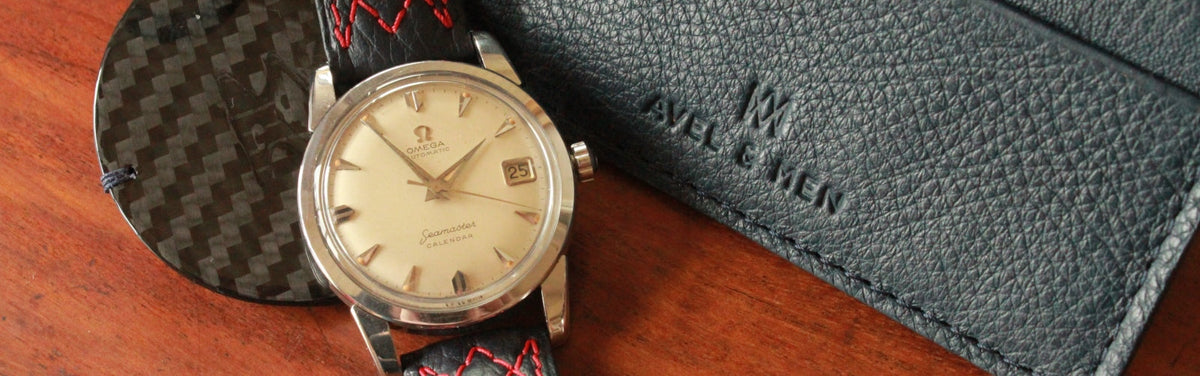
XB: We worked on combining materials, and we developed an exclusive “wind map” lining. It reproduces the isobaric charts sailors use to read wind forecasts, which are essential in racing to anticipate wind shifts and understand the day’s weather. We use Dyneema for the handles of our backpack; carbon fibre on the backpack, the key ring and the notebook, where our logo is engraved on a carbon plate; and technical rope for our watch accessories: the watch pouch and the leather watch roll, for example, both close with a rope.
AM: Why do these materials evoke sailing, and racing in particular?
XB: Carbon, Dyneema and other ropes made from exotic fibres are used on racing boats. As prices have come down, they sometimes appear on cruising boats too, but they remain mostly a racing thing. Their properties matter to competitors who are always looking for more speed: carbon is lighter and stiffer than plastic, and Dyneema stretches less than traditional ropes for a lower weight. It is so strong that it replaces steel cables in some applications. It can also be spliced, a kind of sewing, which sometimes makes it possible to get rid of mechanical parts such as shackles on board.
AM: Why is saving weight so important on board?
XB: It matters a great deal, especially in light winds, and to get the boat planing as early as possible. For the rig (mast, boom, stays…), it is absolutely strategic: a lighter rig lowers the boat’s centre of gravity and reduces the pitching that disturbs the airflow, while cutting the overall weight of the boat. Add the fact that these materials are stiffer and stretch less, and the benefits are even greater: the boat becomes livelier and more responsive.
AM: Can older boats evolve and be fitted with these materials?
XB: Absolutely, and the result can be a real gem! I must admit this was a big source of inspiration when Agnès and I started the Avel & Men project. We wanted to combine traditional materials with technical ones. Our first mood boards mixed leather watch rolls with photos of Half Tonners, and the cotton twill of our linings sat next to a picture of a wooden 505 fitted with a carbon boom… These boats that move with the times are beautiful. I once sailed a wooden Fireball fitted with modern sails: it was as beautiful as a work of art and looked almost fragile, yet it was extremely competitive and remarkably fast on the water!
AM: Your watch pouches are very simple, yet they still evoke the sea…
XB: Yes, our “wind map” lining is a real common thread: even on a small piece of fabric, it brings you into the Avel & Men world. And our leather watch roll closes with a technical rope and a reef knot. We are happy to teach our customers a few sailing basics!